A public safety awareness campaign making street crossings safer for blind and low vision pedestrians.
Help spread the word!
Download our free brochure, flyer, poster, Driver’s Guide,
children’s bookmarks, and more.
Download Free Every Crossing Counts Materials
Introduction
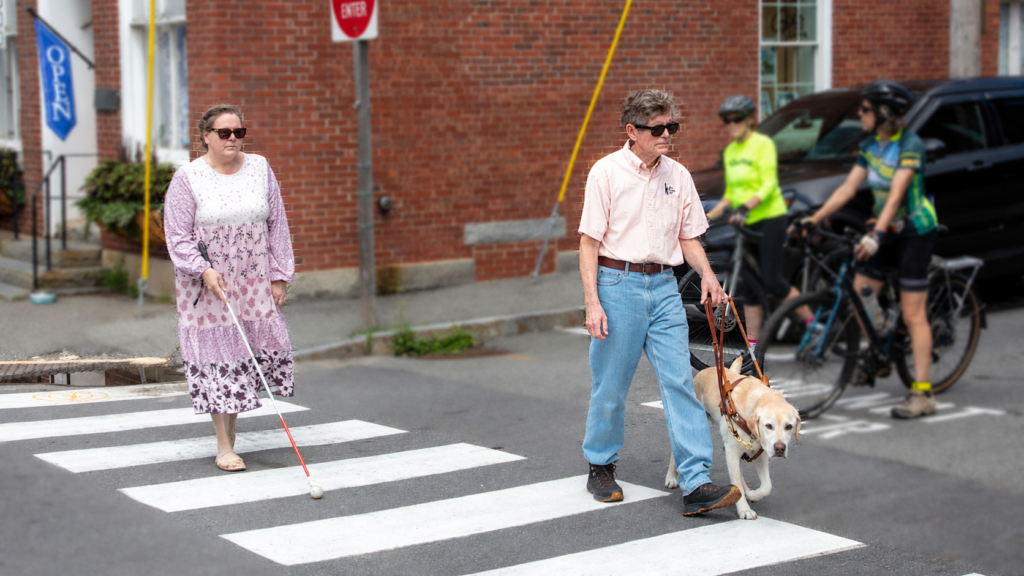
Every day, people who are blind or have low vision cross streets independently using white canes and guide dogs. But safe crossings also require others on the road to do their part.
Why It Matters
Whether on a quiet neighborhood street or a busy multi-lane roadway, many factors beyond a pedestrian’s control can affect the safety of a street crossing, including the actions of others on the road.
Street safety is a shared responsibility. Recognizing a white cane or guide dog is an important first step, but recognition alone isn’t enough. Knowing how to respond matters, too.
Real Stories: Why Every Crossing Counts
Read personal accounts and news reports about collisions and close calls involving blind and low vision pedestrians.
Stay Alert. Slow Down. Yield.
Three ways to make every crossing count
1. Stay Alert
Watch for pedestrians using a long white cane or a guide dog wearing a harness with a rigid handle. Both signal that the pedestrian is blind or has low vision.
2. Slow Down
Use extra caution when approaching a pedestrian using a white cane or guide dog. Slowing down gives you more time to assess the situation and respond safely.
3. Yield
Give the right of way. Yielding gives pedestrians time and space to make a safe crossing.
White Cane Laws
In most states, white cane laws provide heightened protections for pedestrians using white canes or guide dogs.
Find your state’s white cane law
and driver handbook guidance.
Recognize the Signals
White Cane
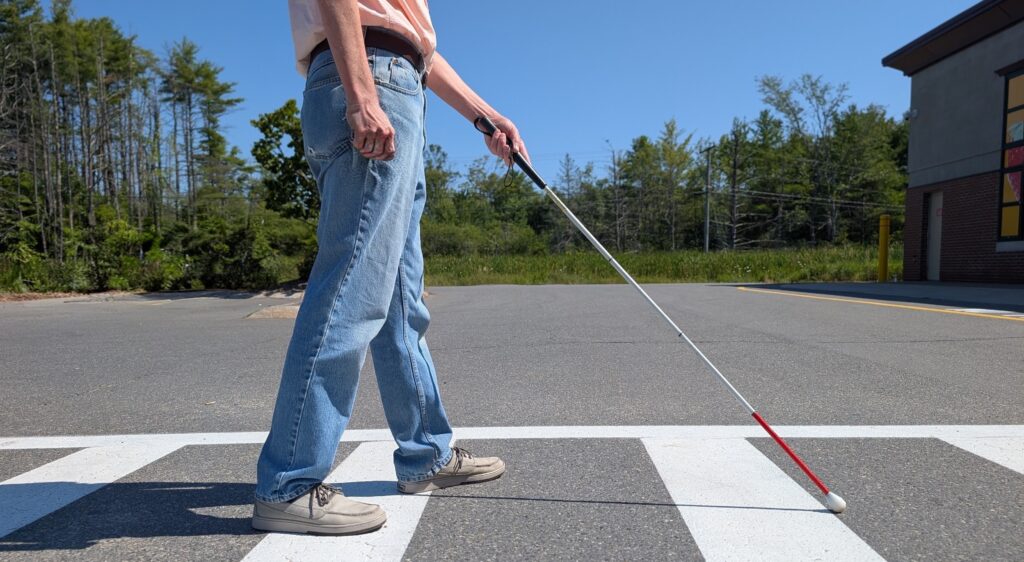
A long white cane—with or without a red tip—is an internationally recognized symbol of blindness and low vision.
Purpose
Helps the user detect obstacles, identify surface changes, and maintain orientation.
What to Look For
A long slender cane that is white and may have a red section near the tip.
At the Curb
Held upright or extended forward, either still or moved in a flagging motion to increase visibility.
While Crossing
Held at waist level and swept side to side across the path of travel, with the tip contacting or near the ground.
Guide Dog
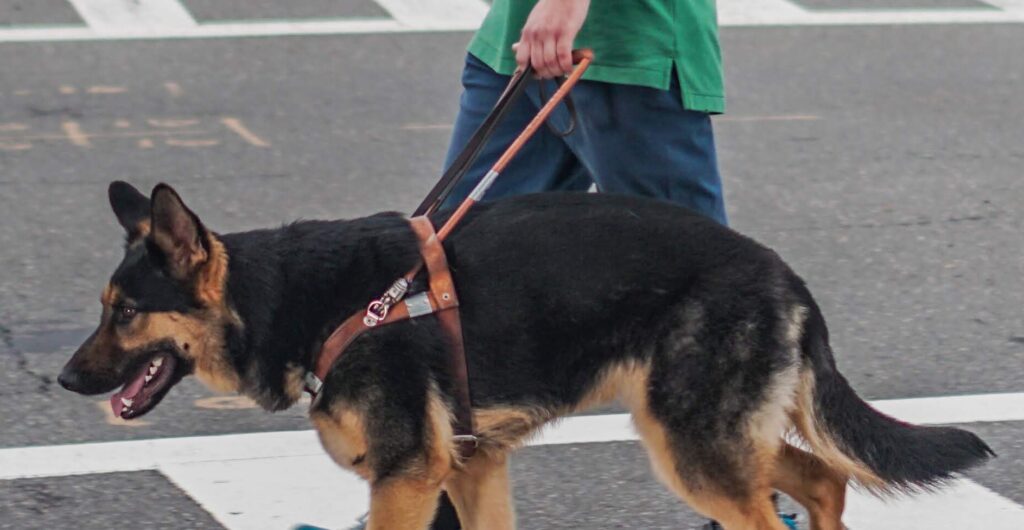
A guide dog wears a distinctive harness with a long, rigid handle used by the handler for guidance.
Purpose
Helps the handler avoid obstacles, navigate surface changes, and maintain orientation.
What to Look For
A dog wearing a specialized harness with a rigid handle that extends along the dog’s back for the handler to hold.
At the Curb
Standing close to the handler’s side, remaining attentive while awaiting instruction.
While Crossing
Walks slightly ahead of the handler, providing directional guidance through movement of the harness handle.
Want to Learn More?
See how people who are blind or have low vision use skills and techniques for safe, independent travel.
Watch orientation and mobility training in action.
Take a closer look at street crossings with a white cane and a guide dog.
What Drivers and Cyclists Need to Know
Eye Contact and Hand Gestures
Safe street crossings often rely on visual communication, such as eye contact and hand gestures. When these cues aren’t visible, it can be unclear whether a driver or cyclist who slows down or stops is yielding, waiting to turn, or simply responding to traffic or other conditions. Road users can reduce this ambiguity by acting predictably—following traffic signals and right-of-way rules, using extra caution, and giving pedestrians time and space to cross.
Horns and Other Sounds
Honking or ringing your bell is not a reliable way to communicate. Pedestrians can only guess whether the sound is meant for them or another road user, or what action they’re expected to take. It can also make them feel pressured to cross before they’re ready, startle them, or drown out important auditory cues.
Traffic Conditions
Modern roadways can present additional challenges. Quieter vehicles, especially hybrids and electric vehicles, can be harder to detect. Multiple lanes, turning traffic, higher speeds, and complex traffic patterns can also make it more difficult for pedestrians who rely on sound and timing to judge vehicle movement and determine when it is safe to cross.
Make Every Crossing Count
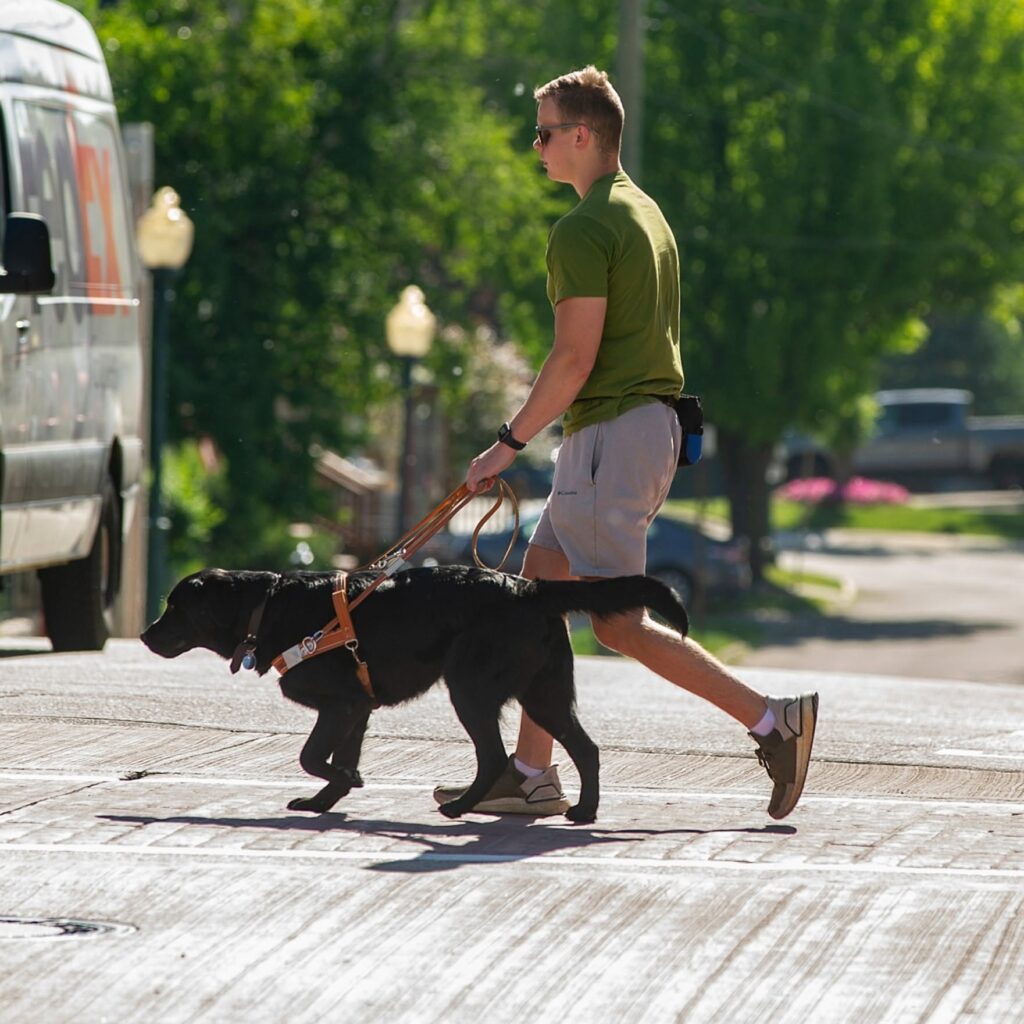
Safe crossings depend on shared responsibility. Recognizing white canes and guide dogs, and understanding how your actions affect every crossing helps make streets safer for everyone. For more information about accessible pedestrian travel for people who are blind or have low vision, visit Accessible Design for the Blind.
Bring the Every Crossing Counts Campaign to Your Community
Share the campaign in your community, workplace, school, or organization. Free resources are available for awareness activities, presentations, events, displays, and everyday outreach.
View and Download Campaign Resources
Help Us Keep the Campaign Growing
Every Crossing Counts materials are provided free of charge so they can be shared as widely as possible. If you find these resources useful, please consider recognizing Pine Tree Guide Dog Users as the creator of the campaign or making a contribution to help support this and other PTGDU initiatives.
Acknowledgements
Every Crossing Counts was made possible through the time, talent, and generosity of many people.
Special thanks to the members of Pine Tree Guide Dog Users who contributed their time, ideas, experience, and enthusiasm to developing this campaign.
Our sincere thanks to Chris Espiritu, our designer, for bringing the campaign and its materials to life.
We are grateful to Dave Cleaveland of Maine Imaging for working with us on a photo shoot to capture the images we needed to help tell the story of the campaign.
Our thanks as well to Leader Dogs for the Blind, The Seeing Eye and Guiding Eyes for the Blind for generously providing photographs and sharing valuable feedback during the development of the campaign.
Finally, special thanks to everyone who participated in our campaign and to those who will help us spread the word and make every crossing count.